Spain to introduce the connected V16 emergency signal on January 1, 2026: a major milestone for roadside safety
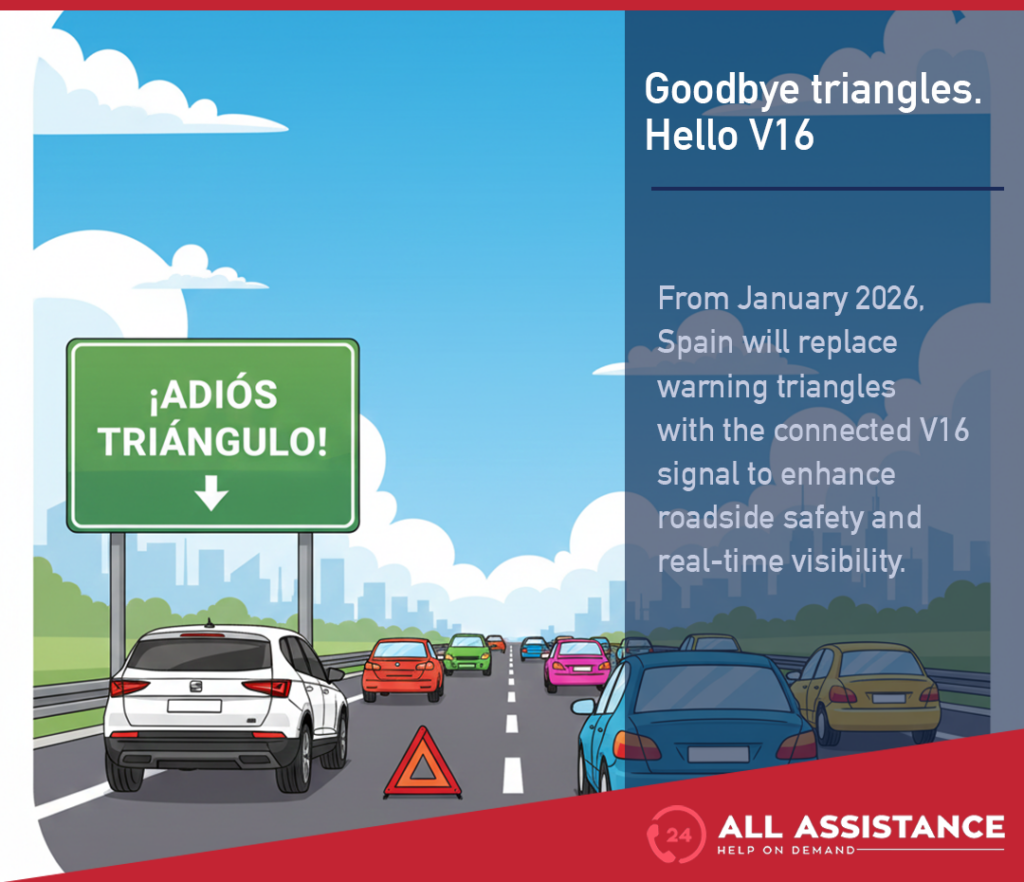
Starting January 1, 2026, Spain will take a major step forward in road safety by replacing traditional reflective warning triangles with the new connected V16 emergency signal. The Dirección General de Tráfico (DGT) has confirmed this device as the future mandatory standard for all vehicles, marking a significant shift in how roadside emergencies are managed.
The V16 beacon is a compact, high-intensity flashing light that can be placed on the roof of a vehicle in seconds. It offers 360° visibility and operates for at least 30 minutes, ensuring maximum safety even in low-visibility conditions. Unlike conventional triangles, the V16 allows drivers to remain inside the vehicle, reducing exposure to traffic and lowering the risk of secondary accidents.
What makes the V16 particularly innovative is its built-in connectivity. When activated, the device automatically sends the vehicle’s real-time location to the DGT 3.0 platform. This enables faster detection of roadside incidents and improves the distribution of essential safety information to other drivers, connected vehicles, and emergency assistance providers.
With a minimum battery life of 18 months and its status as the only legally accepted emergency signal from 2026 onward, the V16 will have a direct impact on assistance workflows, claims handling, and customer safety procedures. Insurers and assistance providers operating across borders will need to adapt to this new standard to ensure compliance and continuity of service.
In this changing regulatory environment, All Assistance remains committed to closely monitoring developments across Europe, providing partners with updated insights, operational recommendations, and the support needed to stay fully prepared.
.