
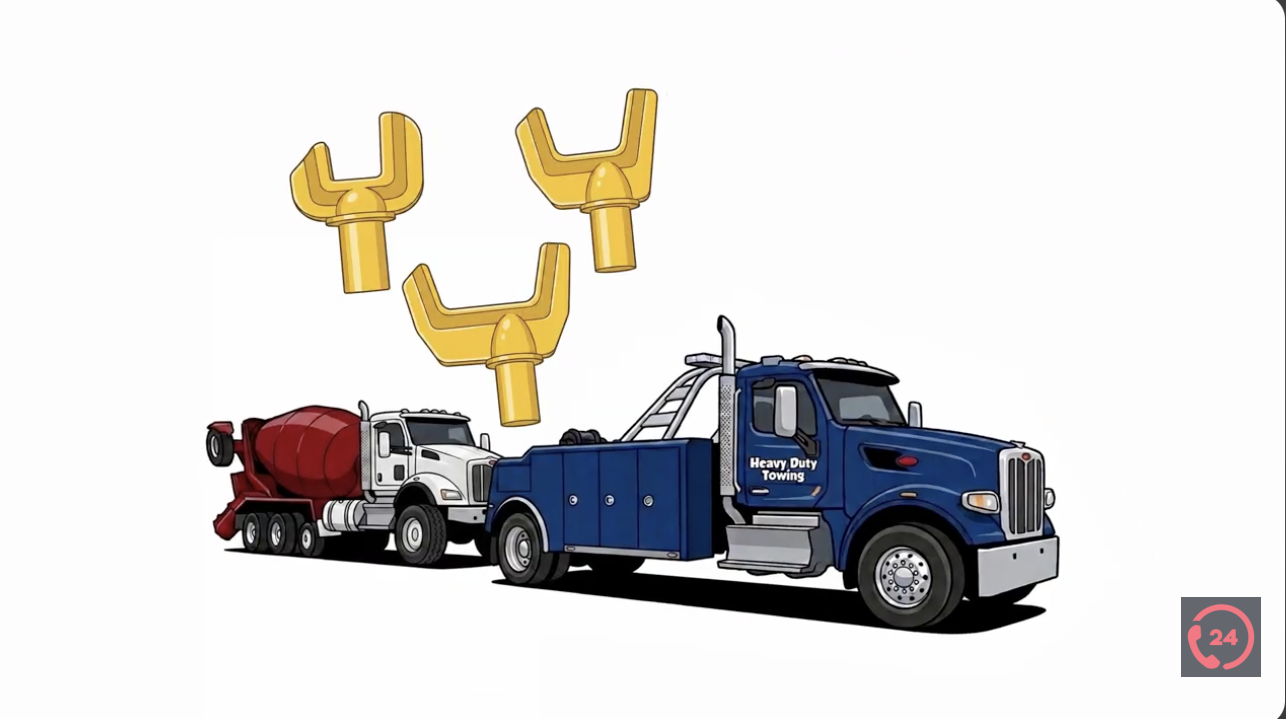
Knowing when to use Short Narrow Front Axle Forks is essential when recovering a vehicle with minimal ground clearance. Many modern cars feature low front bumpers, aerodynamic splitters, or tight wheel wells where a standard tow fork simply cannot fit without risking costly bodywork damage. Therefore, using Short Narrow Front Axle Forks allows recovery operators to work safely and efficiently in tight spaces.
In the fifth episode of our video series Behind the Rescue, the Operations Control Center Specialists at All Assistance walk you through the exact process of positioning, locking, and lifting a vehicle with this specialized heavy-duty equipment.
Step-by-Step Guide to Using Short Narrow Front Axle Forks
When a low-clearance vehicle requires a wheel-lift tow, following the right sequence ensures maximum stability and zero damage to the bumper or suspension:
-
Assess Ground Clearance: First, inspect the space beneath the front axle and behind the tire. When clearance is too tight for a standard fork, select Short Narrow Front Axle Forks designed specifically for compact spaces.
-
Slide the Fork Under the Tire: Next, align the slim profile of the fork and slide it smoothly right under the tire, avoiding contact with low body panels.
-
Position and Lock Securely: Once properly seated around the wheel assembly, engage the locking mechanism to secure the fork firmly in place.
-
Lift Safely Without Wasted Time: Finally, operate the lift smoothly. Because the fork is heavy-duty and properly locked, the vehicle rises securely without wrestling or delays.
Precision Dispatch from Our Control Center Specialists
Recovering low-clearance or sports vehicles requires sending the right truck and the exact attachment on the very first dispatch. For this reason, our Operations Control Center Specialists always verify vehicle specifications during the initial assistance call. Consequently, our provider network arrives fully equipped with Short Narrow Front Axle Forks ready for tough recovery jobs.
